This June, stargazers worldwide are treated to a breathtaking celestial display as Venus and Jupiter, the two brightest planets in our night sky, draw remarkably close together. Visible to the naked eye in the twilight hours, this planetary conjunction offers a unique opportunity for observers across the globe to witness a rare cosmic alignment.
Background: The Dance of the Planets
A planetary conjunction occurs when two or more celestial bodies appear close to each other in the sky from Earth's perspective. While they may seem to nearly touch, the planets remain millions of miles apart in space. This optical illusion is a result of their individual orbital paths around the Sun and our vantage point on Earth. Venus and Jupiter, often dubbed the "Evening Star" and the "King of Planets" respectively, are particularly captivating due to their immense brightness.
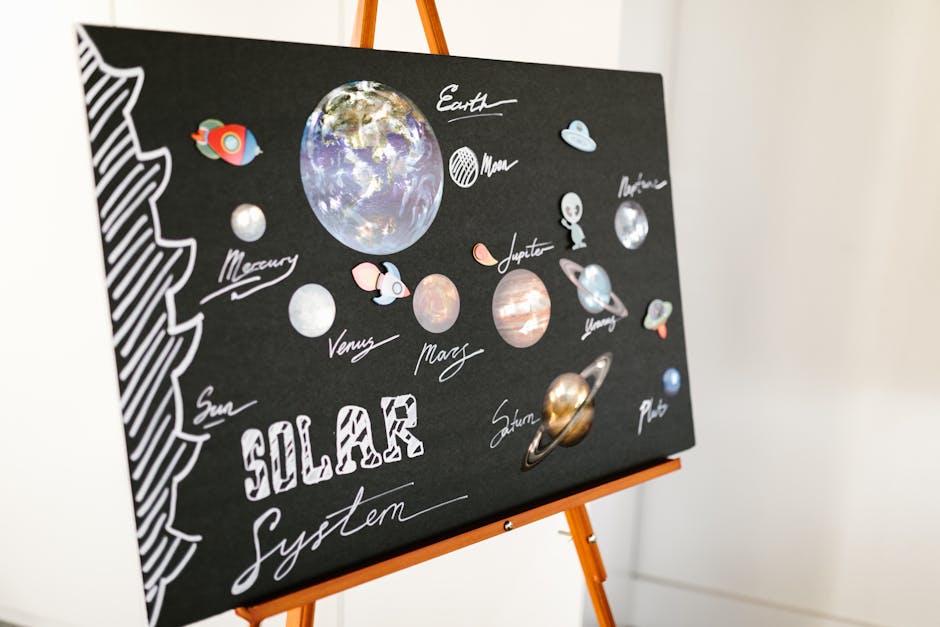
Venus, the second planet from the Sun, is shrouded in a thick, reflective atmosphere that makes it the brightest object in our sky after the Sun and Moon. Its orbit is relatively swift, completing a full revolution in just 225 Earth days. Jupiter, the fifth and largest planet in our solar system, is a gas giant with an orbit of nearly 12 Earth years. Despite its greater distance, its sheer size ensures it remains a prominent beacon in the night sky.
Historically, planetary conjunctions have held significant cultural and astronomical importance. Ancient civilizations across Mesopotamia, Egypt, and Central America meticulously tracked the movements of planets, often attributing divine or prophetic meanings to their alignments. The apparent "meeting" of two bright planets like Venus and Jupiter was frequently interpreted as an omen, a sign of change, or a moment of powerful cosmic energy. Early astronomers, even without telescopes, could observe and chart these movements, laying the groundwork for our understanding of celestial mechanics. The precise prediction of such events became a hallmark of advanced astronomical knowledge.
The mechanics behind a conjunction are a fascinating interplay of orbital speeds and inclinations. Each planet orbits the Sun on its own plane, which is slightly tilted relative to the others. A conjunction occurs when these orbital paths align in such a way that, from Earth, the planets appear to cross paths or come very close. Because Venus orbits closer to the Sun than Earth, it exhibits phases similar to the Moon and is visible only during specific windows as an "evening star" or "morning star." Jupiter, being an outer planet, is generally visible for longer periods throughout the night, though its position relative to the Sun and Earth dictates its visibility at any given time. The current alignment in June sees both planets favorably positioned in the post-sunset or pre-dawn sky, making their apparent close approach easily observable. These events serve as tangible reminders of the dynamic and predictable nature of our solar system, a grand clockwork in perpetual motion.
Key Developments: The June Alignment
The journey towards this spectacular June conjunction has been unfolding over several weeks, with both Venus and Jupiter steadily drawing closer in the sky. Throughout late May and early June, observers have watched as these two luminous giants have converged, setting the stage for their closest apparent approach.
Venus, currently shining at an impressive magnitude of approximately -4.7, is unmistakably brilliant, often the first celestial body to become visible after sunset or the last to fade before sunrise. Its intense brightness is due to its highly reflective cloud cover, which bounces sunlight back into space. Jupiter, though further away, is still a commanding presence, glowing at a magnitude of around -2.0. While not as blinding as Venus, Jupiter’s steady, yellowish-white light easily distinguishes it from twinkling stars. The difference in magnitudes means Venus will appear significantly brighter, almost overpowering Jupiter in direct comparison, yet Jupiter's distinct presence will be undeniable.
The precise date of their closest angular separation, often referred to as the "peak" of the conjunction, varies slightly depending on the exact definition and observation point, but generally falls within the first two weeks of June. During this period, the planets will appear to be separated by less than a degree, meaning they could fit within the field of view of many binoculars and even some wide-field telescope eyepieces simultaneously. This proximity is truly remarkable, as it allows for both planets to be framed together, offering a stunning visual.
For optimal viewing, the best window is typically in the western sky shortly after sunset, or in the eastern sky just before sunrise. The exact timing will depend on your geographical location and the specific date within June. As the sun dips below the horizon, the twilight glow will gradually diminish, allowing the brilliant duo to emerge. Observers should seek a location with a clear, unobstructed view of the horizon, free from tall buildings, trees, and excessive light pollution. Even in urban areas, Venus and Jupiter are bright enough to cut through some light pollution, but darker skies will enhance the experience significantly, potentially revealing fainter stars in the background.
While the conjunction is primarily a naked-eye event, binoculars can provide a magnified view, making the two planets appear even closer and revealing their distinct disks. A small telescope will further enhance the view, potentially showing Venus's crescent phase (as it is currently between Earth and the Sun) and Jupiter's four largest moons (Io, Europa, Ganymede, and Callisto), which often appear as tiny pinpricks of light flanking the giant planet. Observing the subtle differences in their appearance – Venus's steady, intense white light versus Jupiter's slightly larger, more yellowish disk – adds another layer of appreciation to the spectacle.
It's also worth noting that other celestial bodies may occasionally join the scene. The Moon, in its monthly journey across the sky, might pass near Venus and Jupiter during June, creating an even more picturesque alignment. Such triple conjunctions, while less common, are particularly sought after by astrophotographers and casual observers alike. The unique combination of these two prominent planets, with their distinct brightness and characteristics, makes this June's conjunction a particularly compelling event for anyone to witness, regardless of their astronomical expertise.
Impact: A Global Moment of Wonder
The conjunction of Venus and Jupiter in June is more than just an astronomical event; it's a global phenomenon that touches various segments of society, from dedicated astronomers to casual stargazers, and even inspires broader cultural reflections.
For amateur astronomers, this event is a highlight of the year. It presents a prime opportunity for astrophotography, allowing them to capture stunning images of the two planets in close proximity, perhaps even alongside a crescent moon. Astronomy clubs worldwide are organizing public viewing sessions, setting up telescopes in parks and open spaces to share the experience with their communities. These gatherings foster a sense of shared wonder and provide educational opportunities, as experienced members explain the science behind the alignment. It's a chance to dust off equipment, practice observational skills, and connect with fellow enthusiasts.
Professional astronomers also take note of such events, not necessarily for direct scientific study of the conjunction itself (as it's an apparent alignment, not a physical interaction), but for public outreach and engagement. These visible spectacles are invaluable tools for inspiring interest in science, technology, engineering, and mathematics (STEM) fields. Researchers and educators leverage the public's excitement to explain orbital mechanics, planetary characteristics, and the vastness of the cosmos, potentially sparking the curiosity of the next generation of scientists.
The general public is perhaps the most broadly affected. For many, this conjunction offers a rare moment to pause, look up, and connect with the universe. In an increasingly fast-paced world, an easily observable celestial event provides a moment of peace and perspective. It's an opportunity for families to gather, for friends to share a unique experience, and for individuals to feel a sense of connection to something larger than themselves. Social media platforms will undoubtedly be abuzz with shared photos and awe-struck comments, amplifying the event's reach and encouraging even more people to step outside and look skyward. The ease of observation – requiring no special equipment – makes it accessible to everyone, democratizing the experience of astronomical beauty.
Culturally, such conjunctions often resonate with historical narratives. While modern science explains the mechanics, the human tendency to find meaning in the heavens persists. The brilliance of Venus and Jupiter, often associated with love/beauty and power/royalty respectively in ancient mythologies, coming together can evoke a sense of cosmic harmony or a grand celestial ballet. It's a reminder of how humanity has always looked to the stars for guidance, inspiration, and understanding. The shared experience of witnessing this event can transcend geographical and cultural boundaries, uniting people under the same vast sky.
Moreover, the conjunction serves as an educational catalyst. Schools and educational institutions can integrate the event into their curricula, teaching students about planetary motion, light pollution, and the importance of scientific observation. It provides a tangible example of concepts often taught abstractly in textbooks, bringing astronomy to life in a vivid and memorable way. The impact extends beyond pure science, fostering an appreciation for natural beauty and encouraging a sense of stewardship for our planet and its unique position in the cosmos.
What Next: Beyond the Conjunction
As June progresses, the celestial dance between Venus and Jupiter will continue, but their close apparent proximity will begin to wane. After their peak conjunction, the planets will gradually drift apart in the sky, each continuing on its distinct orbital path around the Sun. Venus, with its faster orbit, will continue its journey, eventually transitioning from an "evening star" to a "morning star" in the coming months, disappearing into the glare of the sun before reappearing on the other side. Jupiter, moving at a more leisurely pace, will also shift its position relative to Earth and the Sun, becoming visible at different times of the night over the remainder of the year.
While this particular close conjunction of Venus and Jupiter in June is a highlight, it's important to remember that such alignments are part of the continuous, predictable motion of our solar system. The planets will undoubtedly meet again in future conjunctions. Venus and Jupiter are among the most frequently observed planets in conjunction due to their brightness and relatively swift movements in the sky. Stargazers can look forward to other notable pairings involving these two planets in the years to come, though the exact angular separation and viewing conditions will vary. For instance, future conjunctions might occur closer to the Sun, making them harder to observe, or at a greater angular distance, making them less visually striking.
Beyond Venus and Jupiter, the night sky offers a wealth of other astronomical events to anticipate. Throughout the year, observers can look forward to various meteor showers, such as the Perseids in August or the Geminids in December, offering opportunities to witness "shooting stars." Lunar and solar eclipses also occur periodically, though their visibility is geographically specific. The outer planets, Mars, Saturn, and Uranus, also engage in their own conjunctions with other celestial bodies, often requiring binoculars or telescopes for optimal viewing. Saturn, with its iconic rings, is always a favorite target for telescopic observation, and its opposition (when it's directly opposite the Sun from Earth, making it brightest and largest) is an annual highlight.
For those whose curiosity has been sparked by the Venus-Jupiter conjunction, this event serves as an excellent gateway to continued stargazing. Many online resources, local astronomy clubs, and public observatories offer guidance for beginners, providing information on how to identify constellations, locate other planets, and even explore deep-sky objects like nebulae and galaxies with modest equipment. Investing in a good pair of binoculars or a beginner's telescope can unlock a whole new dimension of celestial observation.
Ultimately, the June conjunction of Venus and Jupiter is a reminder of the dynamic beauty of our universe and the constant, predictable ballet of celestial mechanics. It encourages us to look up, appreciate the grandeur of space, and perhaps inspire a lifelong passion for astronomy. The universe is a vast and ever-changing spectacle, and by paying attention to events like this, we can continually deepen our connection to the cosmos that surrounds us. Keep looking up, for there is always something extraordinary happening above.