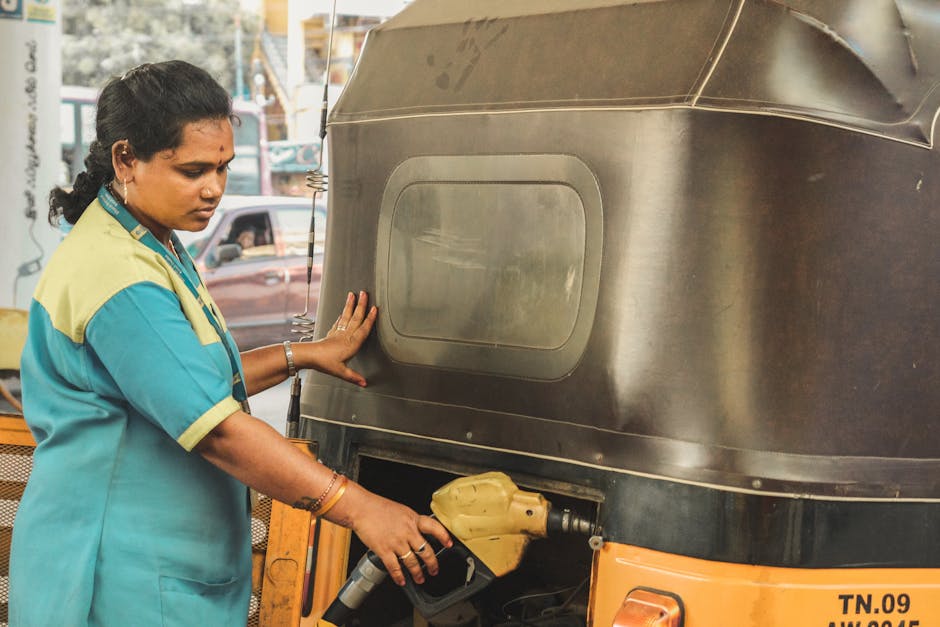
Long queues for petrol and diesel continue to plague fuel stations across Telangana, particularly in Hyderabad and its surrounding districts, despite repeated assurances from the state government and oil marketing companies (OMCs) regarding the normalization of supply. The persistent scarcity, which began in early January, has severely disrupted daily life and commerce, challenging the state's logistical resilience.
Background to the Fuel Shortage
The current fuel crisis in Telangana emerged primarily in the first week of January 2024, stemming from widespread panic buying triggered by a nationwide protest by truck drivers. This protest was a response to stringent provisions under the new Bharatiya Nyaya Sanhita (BNS) concerning hit-and-run cases, which mandate a 10-year jail term and a substantial fine for drivers involved in fatal accidents who flee the scene. The fear of these new penalties led a significant portion of the tanker lorry drivers to cease operations, impacting the transportation of essential goods, including petroleum products, from depots to retail outlets.
The Truckers’ Protest and Supply Chain Disruption
The All India Motor Transport Congress (AIMTC), representing a large segment of the transport sector, had called for a nationwide strike. While the strike was eventually called off after discussions with the Union Home Ministry, its initial impact was immediate and severe. Fuel depots in various parts of the country, including those supplying Telangana, saw a drastic reduction in the dispatch of fuel tankers. This sudden halt in the supply chain created an artificial scarcity at petrol pumps, even though the OMCs maintained that there was no actual shortage of crude oil or refined products at their main terminals.
Within Telangana, the impact was felt across all 33 districts. Major depots like those in Cherlapally and Malkajgiri, which typically dispatch hundreds of tankers daily, experienced a significant drop in operations. This directly translated to empty tanks at numerous petrol stations, leading to widespread panic among commuters and commercial vehicle operators. News of closed pumps and limited stock quickly spread through social media and word-of-mouth, exacerbating the situation as people rushed to fill their tanks, further depleting available reserves.
Government’s Initial Response and Assurances
In response to the escalating crisis, the Telangana government, through its Civil Supplies Department and various district administrations, issued repeated assurances. Officials stated that there was ample stock of petrol and diesel at the major depots and that the disruption was temporary. They urged the public not to engage in panic buying, emphasizing that such behavior only worsened the queues and the perception of scarcity.
Senior officials from the Civil Supplies Department, including the Commissioner, held meetings with representatives of OMCs such as Indian Oil Corporation (IOC), Bharat Petroleum Corporation Limited (BPCL), and Hindustan Petroleum Corporation Limited (HPCL). These meetings aimed to strategize the rapid restoration of supply lines and ensure that fuel reached the retail outlets without further delay. The state administration also sought to mediate with local transport unions to persuade drivers to resume duties, highlighting the essential nature of their service. Despite these efforts and official pronouncements, the ground reality for several days remained challenging, with many pumps operating for limited hours or running dry completely.
Key Developments and Ongoing Challenges
Following the initial shock of the truckers' protest, several measures were initiated to restore normalcy. However, the path to full recovery has been gradual, marked by persistent challenges and fluctuating availability across different regions of Telangana. The state administration and OMCs have been engaged in a continuous effort to stabilize the supply chain and manage public expectations.
Supply Chain Restoration Efforts by OMCs
Oil Marketing Companies (OMCs) like IOC, BPCL, and HPCL have intensified their efforts to dispatch fuel from their major terminals and depots. In Telangana, key depots at Cherlapally, Malkajgiri, and other strategic locations have increased their operational hours and deployed additional staff to expedite the loading of tankers. OMCs have also worked to incentivize drivers to return to work, assuring them of safety and addressing their concerns regarding the new BNS provisions.
To overcome initial driver reluctance, some OMCs reportedly offered higher daily wages or special allowances. Furthermore, coordination with local police was enhanced to ensure the safe passage of fuel tankers, particularly during nighttime hours, to prevent any further disruptions. Despite these efforts, the sheer volume of fuel required daily across Telangana, especially in the Greater Hyderabad Metropolitan Area (GHMC), means that even a slight lag in dispatch can lead to visible shortages at numerous pumps.
Law Enforcement and Queue Management
The prolonged queues at petrol pumps created significant law and order challenges. Local police departments across Telangana were pressed into service to manage the crowds, prevent altercations, and ensure orderly conduct at fuel stations. In Hyderabad, police personnel were deployed at high-demand pumps in areas like Begumpet, Jubilee Hills, and Secunderabad, where wait times often stretched for hours.
Police intervention became crucial to prevent road blockages caused by long lines of vehicles spilling onto main thoroughfares. In some instances, fuel stations that ran out of stock had to be temporarily closed by authorities to prevent further congestion and public frustration. The police also played a role in disseminating information, advising citizens on which pumps were operational and encouraging them to avoid panic buying. This direct involvement underscored the severity of the situation and the multi-agency effort required to mitigate its effects.
Demand-Supply Dynamics and Regional Disparities
While OMCs reported a significant increase in fuel dispatch rates, the demand side remained volatile. The initial panic buying created an artificial spike in demand that took several days to subside. Even as supplies gradually improved, the psychological impact of the shortage meant that many motorists continued to top up their tanks more frequently than usual, perpetuating higher demand.
Regional disparities were also evident. Urban centers like Hyderabad, Warangal, and Karimnagar, with higher vehicle density and commercial activity, experienced more pronounced and prolonged queues. Rural areas, while also affected, sometimes saw less intense panic dueating to lower overall demand. However, the impact on agricultural activities and local transportation in these areas was equally significant. The cumulative effect of increased demand, coupled with the initial supply shock, meant that despite assurances, many pumps struggled to maintain consistent stock, leading to intermittent closures and continued public inconvenience.
Impact of the Fuel Shortage
The prolonged fuel shortage has had a cascading effect across various sectors in Telangana, disrupting daily routines, impacting livelihoods, and adding significant strain to the state's economy. The immediate inconvenience for individual commuters quickly escalated into broader societal and economic challenges.
Disruption to Daily Life and Commuting
For the average citizen, the most immediate and visible impact was the arduous task of finding fuel. Commuters in cities like Hyderabad, Cyberabad, and Warangal spent hours in serpentine queues, often stretching for hundreds of meters. This led to significant delays in reaching workplaces, schools, and essential appointments. Many individuals reported missing work or being late, affecting productivity and personal schedules.
Public transportation, though less directly affected than private vehicles, also faced challenges. Auto-rickshaws, a primary mode of last-mile connectivity, often had to spend considerable time at pumps, reducing their operational hours and income. Bus services, particularly those operated by the Telangana State Road Transport Corporation (TSRTC), generally had dedicated fuel arrangements, but even they faced logistical hurdles in ensuring timely refills for their vast fleet, leading to some minor delays in certain routes. The overall disruption to daily commuting patterns created widespread frustration and anxiety among the populace.
Economic Repercussions and Commercial Activity
The economic fallout of the fuel shortage was substantial. Businesses relying on transportation for their operations were severely hit. Logistics companies faced delays in delivery schedules, leading to increased operational costs and potential penalties for missed deadlines. E-commerce deliveries, a critical part of urban life, experienced significant slowdowns, impacting customer satisfaction and business reputation.
Small and medium-sized enterprises (SMEs), particularly those involved in retail, food delivery, and local services, bore the brunt of the crisis. Daily wage earners, including street vendors and construction workers who depend on public transport or personal two-wheelers, found their mobility restricted, directly impacting their ability to earn a living. The informal sector, which thrives on daily movement and transactions, experienced a noticeable slump. The cumulative effect was a temporary but significant dampening of economic activity across various sectors.
Impact on Essential Services and Agriculture
While emergency services like ambulances and police vehicles typically have priority access to fuel, the general disruption still posed logistical challenges. Ensuring uninterrupted supply for these critical services required active coordination and dedicated arrangements, diverting resources that could otherwise be used for routine operations.
In agricultural areas, the shortage threatened the timely operation of farm machinery, such as tractors and irrigation pumps, particularly crucial during specific sowing or harvesting seasons. Although the full extent of the impact on agriculture might not be immediately apparent, prolonged shortages could disrupt planting cycles and affect crop yields, leading to broader food security concerns in the long run. The reliance on diesel for various agricultural activities underscores the critical nature of an uninterrupted fuel supply in a predominantly agrarian state like Telangana.
Public Sentiment and Trust
The repeated assurances from the government and OMCs, juxtaposed with the persistent queues and dry pumps, eroded public trust. Citizens expressed frustration and anger, questioning the efficacy of the measures taken and the transparency of communication. Social media platforms became a hub for sharing real-time updates on pump closures and long queues, often accompanied by critical commentary on the handling of the crisis.
The psychological impact of uncertainty and the daily struggle to procure fuel added to the stress levels of the population. This erosion of trust can have long-term implications for public cooperation during future crises and for the overall perception of governance effectiveness. The episode highlighted the importance of not only resolving the immediate crisis but also of effective, transparent communication to manage public expectations.
What Next: Path to Full Normalization and Future Preparedness
As Telangana slowly navigates out of the immediate crisis, the focus shifts towards achieving complete normalization of fuel supply and implementing robust strategies to prevent similar disruptions in the future. The state government, in collaboration with OMCs and other stakeholders, is expected to outline a comprehensive plan addressing both short-term stabilization and long-term resilience.
Achieving Full Normalization
The immediate priority remains the complete restoration of regular fuel availability at all retail outlets across Telangana. OMCs are continuously monitoring stock levels at depots and pumps, adjusting dispatch schedules to meet demand. The expectation is that within the next few days to a week, the last vestiges of panic buying will subside, and the supply chain will operate at its optimal capacity, leading to the disappearance of queues.
District administrations are maintaining a close watch on the situation, with daily reports being submitted to the state government. This granular monitoring helps in identifying specific areas or pumps still facing issues and directing resources accordingly. Public advisories will likely continue, urging citizens to revert to their normal fuel consumption patterns and avoid hoarding, which can artificially inflate demand. The goal is to ensure that every petrol pump has sufficient stock to meet the daily requirements without any waiting period for consumers.
Enhancing Supply Chain Resilience
Looking beyond the current crisis, there is a clear need to strengthen the resilience of Telangana's fuel supply chain. This involves reviewing logistics infrastructure, including the capacity of existing depots and the efficiency of transportation networks. Discussions may arise regarding the establishment of additional strategic reserves or improving multi-modal transport options for fuel, reducing over-reliance on a single mode of transport like road tankers.
Furthermore, collaboration with transport unions and driver associations will be crucial. Establishing clear communication channels and grievance redressal mechanisms can help prevent future strikes from escalating into widespread public crises. The government might explore agreements that designate fuel transportation as an essential service, with provisions for uninterrupted operations even during protests, under specific guidelines.
Policy Review and Crisis Management Protocols
The recent events highlight the importance of robust crisis management protocols for essential commodities. The Telangana government is expected to undertake a thorough review of its existing emergency response framework for fuel shortages. This would involve defining clear roles and responsibilities for various departments, establishing rapid assessment mechanisms, and developing transparent communication strategies for the public during such events.
Consideration may also be given to leveraging technology for real-time monitoring of fuel stock levels across all pumps and depots. A centralized digital dashboard could provide immediate insights into supply gaps and enable proactive interventions. Additionally, public awareness campaigns could be launched to educate citizens on responsible consumption during crises and to build trust in official assurances, thereby mitigating panic buying tendencies.
Long-Term Vision and Alternative Fuels
In the long term, the crisis could spur greater momentum towards exploring and promoting alternative fuels. While a direct solution to the current fossil fuel dependency, discussions around electric vehicles (EVs), Compressed Natural Gas (CNG), and other sustainable energy sources might gain renewed urgency. Investing in charging infrastructure and incentivizing the adoption of EVs could gradually reduce the state's vulnerability to disruptions in conventional fuel supply.
The recent fuel shortage in Telangana serves as a critical reminder of the intricate dependencies within modern infrastructure and the profound impact even localized disruptions can have on daily life and economic stability. The path forward requires not just immediate resolution but also a strategic, forward-looking approach to build a more resilient and sustainable energy ecosystem for the state.