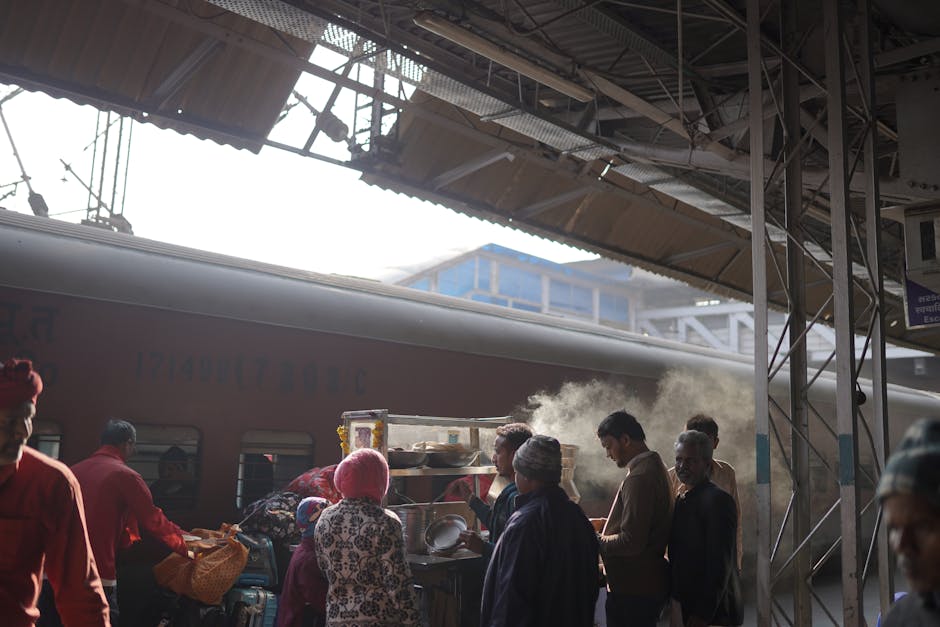
A passenger was reportedly beaten with sticks by catering staff on a train near Jhansi, Uttar Pradesh, following a dispute over the price of a meal. The incident, which occurred on November 27, 2023, aboard the Punjab Mail, has prompted a swift reaction from Indian Railways and raised renewed concerns about passenger safety and catering service quality across the vast network.
Background to the Incident
The altercation unfolded on Monday evening as the 12137 Punjab Mail, en route from Mumbai to Firozpur Cantt, was passing through the Jhansi railway division. According to initial reports, the passenger, identified as Rahul Singh, a resident of Haryana, had ordered a meal from the onboard catering service. The dispute arose when Singh questioned the price quoted by the catering staff, alleging it was higher than the official rates prescribed by Indian Railways Catering and Tourism Corporation (IRCTC).
The Specifics of the Dispute
Singh claimed that the catering staff demanded an inflated price for a standard meal, refusing to provide a receipt or clarify the discrepancy. When he challenged the overcharging, the situation quickly escalated from a verbal argument to a physical confrontation. Multiple catering personnel reportedly ganged up on Singh, using sticks to assault him within the train coach, in full view of other passengers. The brutality of the attack left Singh with visible injuries, including lacerations and bruises.
A History of Complaints
This incident is not an isolated occurrence within the Indian railway system. Overcharging for food and beverages, poor quality of meals, and the refusal to issue receipts have been persistent complaints from passengers for years. Despite numerous directives from IRCTC and Indian Railways, these issues continue to plague onboard catering services, often leading to confrontations between passengers and staff. Such incidents underscore a systemic problem that railway authorities have struggled to fully address.
IRCTC’s Role in Onboard Catering
IRCTC, a subsidiary of Indian Railways, is responsible for managing catering, tourism, and online ticketing operations. It sets standard prices for meals and snacks sold on trains and mandates that all catering vendors issue proper receipts for every transaction. The goal is to ensure transparency, prevent overcharging, and maintain a consistent quality of service. However, the implementation of these guidelines by third-party contractors and their staff often falls short, leading to situations like the one witnessed on the Punjab Mail. The sheer scale of operations, covering thousands of trains daily, presents a significant challenge for stringent oversight.
Key Developments Following the Attack
The immediate aftermath of the incident saw swift action from both railway authorities and law enforcement. The injured passenger, Rahul Singh, managed to alert railway officials and file a complaint as soon as the train reached the next major station. Visual evidence, reportedly captured by fellow passengers on mobile phones, quickly circulated on social media, amplifying the outrage and putting pressure on the authorities to respond decisively.
Swift Action by Authorities
Upon receiving the complaint and reviewing the evidence, the Railway Protection Force (RPF) and local police promptly registered a First Information Report (FIR) against the involved catering staff. The FIR was filed under relevant sections of the Indian Penal Code, including assault and voluntarily causing hurt. Within hours, railway authorities confirmed the suspension of the catering contract for the specific vendor responsible for the Punjab Mail's services. Additionally, several catering staff members directly involved in the assault were apprehended and taken into custody.
Public Outcry and Media Scrutiny
The incident garnered significant attention across traditional and social media platforms. News channels broadcasted reports, and the video footage went viral, sparking widespread condemnation from the public, passenger associations, and even political figures. Many expressed shock at the brazenness of the assault and questioned the safety of passengers on Indian trains. The incident became a stark reminder of the vulnerabilities faced by travelers and reignited debates about the accountability of service providers and the effectiveness of railway grievance redressal mechanisms. The Ministry of Railways also faced pressure to issue a statement and outline concrete steps to prevent future occurrences.
Investigation Launched
In response to the severity of the incident and the public outcry, Indian Railways initiated a high-level inquiry. A committee comprising senior railway officials was formed to thoroughly investigate the circumstances leading to the assault. The investigation's mandate includes examining CCTV footage from the train, if available, gathering statements from other passengers and railway staff, and reviewing the operational protocols of the catering contractor. The committee is tasked with submitting a detailed report with recommendations to prevent similar incidents and strengthen passenger safety measures. This comprehensive review aims to identify not just the individuals responsible but also systemic weaknesses that allowed the situation to escalate.
Impact of the Incident
The violent altercation on the Punjab Mail has had far-reaching consequences, affecting the victim, the involved staff and contractors, and the broader perception of Indian Railways' commitment to passenger safety and service quality. The ripple effects extend beyond the immediate incident, touching upon trust, policy, and operational practices.
Victim’s Ordeal and Recovery
For Rahul Singh, the passenger, the incident was a traumatic experience. Beyond the physical injuries, which required medical attention and treatment, he likely endured significant psychological distress. The sense of vulnerability and betrayal while traveling on a public service can be deeply unsettling. His recovery will involve not only healing from the physical wounds but also regaining confidence in public transport. The financial burden of medical expenses, coupled with potential loss of work during recovery, adds another layer of hardship for the victim, highlighting the personal cost of such disputes.
Broader Implications for Railway Travel
The incident has significantly eroded passenger confidence in railway services, particularly regarding onboard catering. Many travelers now express heightened anxiety about confronting catering staff over price or quality issues, fearing similar violent repercussions. This reluctance to challenge wrongdoing can embolden unscrupulous vendors to continue malpractices, creating a cycle of exploitation. The incident also casts a shadow on the overall safety perception of Indian Railways, which prides itself on being one of the world's largest and safest rail networks. Such events undermine years of effort to build a reliable and passenger-friendly image.
On Railway Staff and Contractors
The catering staff directly involved face severe legal consequences, including arrest, criminal charges, and potential imprisonment. Their employment is certainly terminated, and their careers in the service industry are likely over. For the catering contractor, the impact is equally devastating. The immediate suspension and likely termination of their contract with IRCTC mean a significant loss of business and revenue. Furthermore, the company's reputation is severely damaged, potentially leading to blacklisting from future railway contracts and difficulty securing other business opportunities. This serves as a stark warning to other contractors about the serious repercussions of failing to manage their staff and adhere to service standards.
On Indian Railways’ Image
Indian Railways, as the overarching authority, bears the brunt of the negative publicity. The incident has sparked widespread criticism, forcing the organization to publicly address concerns about passenger safety, vendor accountability, and the effectiveness of its complaint mechanisms. It puts immense pressure on the railway administration to not only take punitive action but also to implement more robust preventive measures. The incident highlights a gap between policy formulation and its ground-level implementation, prompting a re-evaluation of oversight mechanisms and enforcement strategies. Rebuilding public trust will require sustained and visible efforts to demonstrate a genuine commitment to passenger welfare.
What Next for Indian Railways and Passengers
The incident on the Punjab Mail demands more than just punitive action; it necessitates a comprehensive review and implementation of reforms to prevent future occurrences and restore passenger confidence. Indian Railways is expected to leverage this unfortunate event as a catalyst for significant operational and policy changes.
Strengthening Regulatory Frameworks
A primary focus will be on strengthening the regulatory framework governing catering services. This includes revising contract clauses with vendors to incorporate stricter penalties for overcharging, poor service, and staff misconduct, including violent behavior. Clauses for immediate contract termination and blacklisting of contractors found in gross violation are likely to be made more explicit and enforceable. There will be an increased emphasis on mandatory staff training for all catering personnel, covering customer service, conflict resolution, and the legal repercussions of their actions. This training should aim to instill a culture of respect and adherence to rules.
Leveraging Technology for Transparency
Indian Railways is expected to accelerate the adoption of technology to enhance transparency and accountability in catering services. The widespread implementation of Point of Sale (POS) machines with mandatory receipt generation for every transaction will be crucial. This move aims to eliminate manual billing errors and prevent overcharging by providing passengers with a clear record of their purchase and the official price. Digital menus displaying fixed prices, accessible via QR codes or railway apps, could also be introduced to empower passengers with accurate pricing information before ordering. Furthermore, the installation of more CCTV cameras in pantry cars and common coaches can provide vital evidence in case of disputes and act as a deterrent against misconduct.
Improving Complaint Mechanisms and Response
The existing complaint mechanisms, such as the RailMadad helpline and social media channels, will likely undergo an overhaul to ensure quicker response times and more effective resolution. Public awareness campaigns will be launched to educate passengers about their rights and the correct channels for lodging complaints. This includes clear instructions on how to report overcharging, request receipts, and escalate issues. Railway officials will be tasked with more frequent and unannounced inspections of catering services on trains, conducting random checks on prices, quality, and staff conduct. The goal is to create a more responsive and accessible system for passenger grievances.
Legal Proceedings and Victim Support
The legal proceedings against the arrested catering staff will move forward, with the railway administration likely cooperating fully with law enforcement to ensure a thorough investigation and appropriate prosecution. This includes providing all necessary evidence and witness support. Furthermore, there will be discussions around potential compensation for the victim, Rahul Singh, for his injuries and trauma. While the legal system will determine criminal liability, Indian Railways might also explore mechanisms to provide ex-gratia payments or facilitate medical support to victims of such incidents, demonstrating a commitment to passenger welfare beyond just punitive measures.
Rebuilding Passenger Trust
Ultimately, the long-term goal for Indian Railways will be to rebuild passenger trust. This will require a sustained effort to demonstrate tangible improvements in safety, service quality, and accountability. Regular updates on the implemented reforms, transparent reporting of actions taken against errant staff and contractors, and consistent communication with the public will be vital. The incident serves as a critical juncture for Indian Railways to not only address a specific failure but to fundamentally reinforce its commitment to providing a safe, reliable, and respectful travel experience for millions of passengers daily.