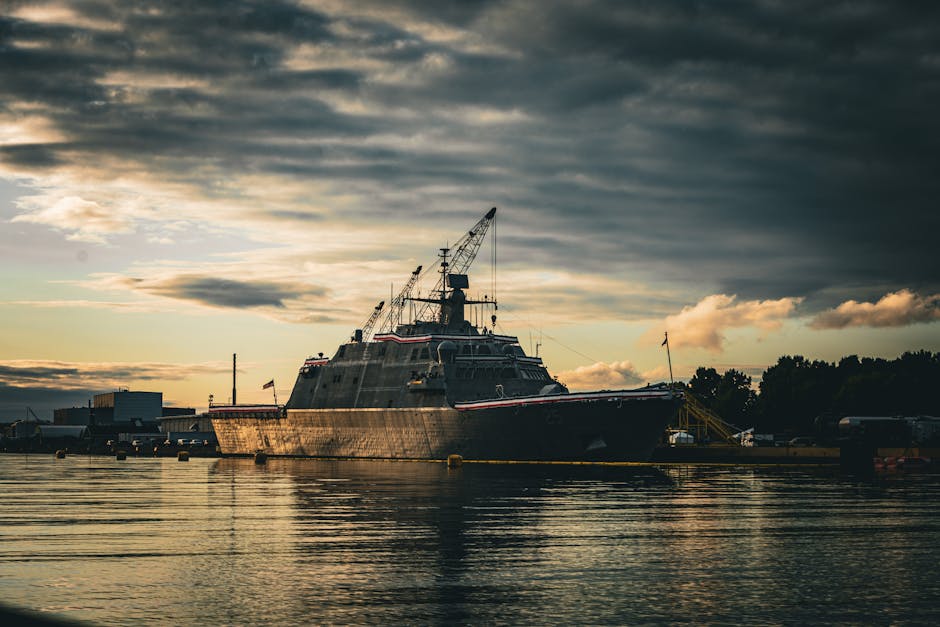
Beijing has issued a measured diplomatic response to former U.S. President Donald Trump's recent call for nations to dispatch warships to secure the critical Strait of Hormuz, framing its stance as that of a "sincere friend" advocating for dialogue and de-escalation. The Chinese Foreign Ministry underscored the importance of regional stability and multilateral cooperation over military posturing in the vital global energy chokepoint.
Background and Context of Hormuz Tensions
The Strait of Hormuz, a narrow waterway connecting the Persian Gulf with the Arabian Sea and the Gulf of Oman, holds unparalleled strategic significance for global energy markets. Approximately one-fifth of the world’s total oil consumption and a substantial portion of its liquefied natural gas (LNG) transits through this chokepoint daily, making its security paramount for the global economy. Its narrowest point is just 21 nautical miles wide, with the shipping lanes themselves only two miles wide in either direction, separated by a two-mile buffer zone.
Historical Volatility and U.S. Presence
The region has been a focal point of geopolitical tensions for decades. Iran, bordering the Strait to the north, views the waterway as a crucial element of its national security and has, on various occasions, threatened to disrupt shipping in response to external pressures or sanctions. The United States, committed to ensuring freedom of navigation, maintains a significant naval presence in the region, primarily through its Fifth Fleet, headquartered in Bahrain. This presence has often been a source of friction with Tehran.
Incidents in the Strait have frequently escalated regional tensions. During the 1980-1988 Iran-Iraq War, the "Tanker War" saw attacks on merchant shipping by both sides, prompting international naval escorts. More recently, in 2019, a series of attacks on oil tankers, attributed by the U.S. and its allies to Iran, led to a significant increase in maritime security concerns and the deployment of additional naval assets by several nations. These events highlighted the fragility of security in the Strait and its immediate impact on global oil prices and shipping insurance premiums.
Trump Administration’s “Maximum Pressure” Campaign
Donald Trump’s presidency was marked by a hawkish stance towards Iran. In 2018, his administration unilaterally withdrew the U.S. from the Joint Comprehensive Plan of Action (JCPOA), commonly known as the Iran nuclear deal, which had been negotiated by the Obama administration. This withdrawal was followed by the re-imposition and expansion of stringent sanctions targeting Iran’s oil exports, banking sector, and other key industries, initiating a “maximum pressure” campaign aimed at compelling Iran to negotiate a new, more comprehensive agreement.
Throughout this period, Trump frequently urged allies, particularly European nations, to take a more assertive role in confronting perceived Iranian aggression and securing regional waterways. His rhetoric often emphasized burden-sharing, suggesting that countries benefiting from the free flow of oil should contribute more directly to its security, rather than solely relying on U.S. military power. His recent call for warships in Hormuz echoes these long-held sentiments, particularly given the ongoing global energy landscape and persistent regional instability.
China’s Growing Interests in the Middle East
China’s economic and strategic interests in the Middle East have expanded significantly over the past two decades. As the world’s largest importer of crude oil, China is heavily reliant on Middle Eastern energy supplies, with a substantial portion transiting through the Strait of Hormuz. This dependence underscores Beijing’s vested interest in the region’s stability and the unimpeded flow of maritime trade.
Beyond energy, China's Belt and Road Initiative (BRI) has seen substantial investment in infrastructure projects across the Middle East, further integrating the region into its global economic network. While China maintains robust economic ties with Iran, it also cultivates strong relationships with Saudi Arabia, the United Arab Emirates, and other Gulf Cooperation Council (GCC) states. Beijing generally advocates for a non-interventionist foreign policy, emphasizing economic cooperation and diplomatic solutions to regional conflicts, rather than military confrontation. Its growing naval capabilities, including its base in Djibouti, primarily support anti-piracy operations and protect its maritime trade routes, rather than projecting power in regional conflicts.
Key Developments and China’s Response
The latest diplomatic exchange was triggered by former U.S. President Donald Trump’s public statement, which reiterated his long-standing position that nations benefiting from the free passage of oil through the Strait of Hormuz should shoulder the responsibility of its security. While the precise timing and platform of Trump’s most recent remarks were not detailed, they align with his consistent calls for allies to increase their contributions to collective security, particularly in regions where U.S. interests are paramount. He specifically urged countries to send their own warships to secure the vital waterway, implying a reduced U.S. appetite for unilateral action or a desire for greater allied burden-sharing.
China’s Diplomatic Stance: A “Sincere Friend”
In response to Trump’s call, the Chinese Foreign Ministry delivered a carefully worded statement, emphasizing Beijing’s commitment to regional peace and stability. A spokesperson for the Ministry stated, “As a sincere friend to all countries in the Middle East, China believes that maintaining peace and stability in the Gulf region serves the common interests of all parties.” This framing positions China as a neutral, benevolent actor focused on collective well-being rather than partisan interests.
The Ministry's statement implicitly rejected the notion of increased militarization as a solution. Instead, it advocated for a path of dialogue and consultation. "We have always called on relevant parties to exercise restraint, adhere to dialogue and consultation, and resolve differences through peaceful means," the spokesperson articulated. This approach is consistent with China's broader foreign policy doctrine, which frequently champions multilateralism, non-interference in internal affairs, and the settlement of disputes through diplomatic channels. Beijing’s response highlighted its belief that the security of the Strait should be guaranteed through collaborative efforts that address the root causes of instability, rather than through a show of military force that could potentially exacerbate tensions.
Contrasting Approaches to Regional Security
China’s response clearly contrasts with the more confrontational approach often favored by the U.S., particularly under the Trump administration. While Trump’s strategy leaned towards projecting military strength and imposing economic pressure to achieve security objectives, China’s preferred method involves fostering economic interdependence, promoting diplomatic engagement, and supporting multilateral frameworks. Beijing’s vision for regional security often includes proposals for a new, inclusive security architecture in the Middle East, one that involves all regional stakeholders and is not dominated by external powers.
This diplomatic exchange underscores a fundamental divergence in how Washington and Beijing perceive and approach global security challenges. For China, stability in the Strait of Hormuz is not merely about ensuring the flow of oil but about preventing broader regional conflicts that could disrupt its extensive economic investments and diplomatic initiatives across the Middle East. Its "sincere friend" rhetoric seeks to project an image of a responsible global power offering a constructive, peaceful alternative to military escalation.
Impact and Repercussions
The ongoing debate over the security of the Strait of Hormuz, intensified by calls for increased military presence and diplomatic counter-proposals, carries significant implications for various stakeholders, from global energy markets to international relations and regional stability.
Global Energy Market Volatility
The most immediate and tangible impact of heightened tensions in the Strait of Hormuz is on global energy markets. Any perceived threat to shipping in the waterway typically leads to an immediate spike in crude oil prices, as traders factor in potential supply disruptions. Shipping insurance premiums for vessels traversing the Strait also surge, increasing operational costs for oil and gas companies and ultimately impacting consumer prices worldwide. Major oil importers like China, India, Japan, and South Korea are particularly vulnerable to these fluctuations, as their economies are heavily reliant on the steady flow of Middle Eastern energy. Even the mere rhetoric of military escalation, such as Trump’s call for warships, can introduce market uncertainty, affecting investment decisions and long-term energy planning.
Regional Stability and Escalation Risks
An increased military presence, as advocated by Trump, carries inherent risks of miscalculation or accidental escalation. A dense concentration of naval assets from various nations, potentially operating under different rules of engagement, could heighten the chances of unintended confrontations with Iranian forces. Such incidents could quickly spiral into broader regional conflicts, drawing in other powers and further destabilizing an already volatile Middle East. This would have devastating consequences for countries like Iraq, Yemen, and Syria, which are already grappling with internal conflicts and humanitarian crises. China’s emphasis on dialogue aims to mitigate these risks by promoting de-escalation and peaceful resolution, thereby safeguarding regional stability.
U.S.-China Relations and Geopolitical Rivalry
The differing approaches to Hormuz security highlight another fault line in the increasingly complex U.S.-China relationship. While both nations share an interest in the free flow of oil, their preferred methods for achieving this goal are starkly divergent. The U.S. often views military deterrence as a primary tool for maintaining order, whereas China champions multilateralism and economic diplomacy. This divergence contributes to the broader geopolitical rivalry, where each power seeks to demonstrate the superiority of its foreign policy model. China’s “sincere friend” narrative also subtly positions Beijing as a more reliable and less confrontational partner for Middle Eastern nations compared to Washington’s more interventionist stance.
Iran’s Internal and External Posture
For Iran, calls for increased military presence in its immediate vicinity are often viewed as a direct threat to its sovereignty and national security. Such rhetoric can embolden hardliners within the Iranian political establishment, making it more difficult for reformists or moderates to advocate for diplomatic engagement. It can also reinforce Iran’s resolve to develop its own defensive capabilities and potentially lead to more assertive actions in the Strait, further complicating de-escalation efforts. Conversely, China’s call for dialogue might be welcomed by elements within Iran seeking a less confrontational path, potentially offering Beijing a unique role as a mediator or facilitator.
Impact on Shipping and Trade
The global shipping industry is directly affected by security concerns in the Strait. Increased threats necessitate higher insurance premiums, longer transit times due to heightened security protocols or rerouting, and greater operational costs. Major shipping companies often consult security advisories from various naval forces and international organizations before traversing high-risk areas. A sustained period of instability could lead to some shipping lines avoiding the Strait altogether, opting for longer and more expensive routes, such as circumnavigating Africa, which would have cascading economic effects on global supply chains.
What Next: Anticipated Milestones and Trajectories
The diplomatic interplay surrounding the Strait of Hormuz is unlikely to dissipate quickly, given its critical geopolitical and economic importance. Several trajectories and potential milestones could emerge from the current situation.
Continued Diplomatic Engagements and Initiatives
China is expected to continue advocating its “sincere friend” approach, likely through diplomatic channels at the United Nations, regional forums, and bilateral discussions with Middle Eastern nations. Beijing might propose specific initiatives aimed at fostering a new regional security dialogue, potentially involving Iran, Saudi Arabia, and other key players, focused on de-escalation and confidence-building measures. These efforts would aim to present China as a constructive alternative to military solutions and reinforce its growing diplomatic influence in the region.
Potential for Naval Deployments and Counter-Deployments
While it remains to be seen if any nations will directly heed Trump’s call for additional warship deployments, the U.S. and its traditional allies in the Gulf are likely to maintain or even subtly enhance their existing naval presence to safeguard freedom of navigation. Any overt increase in allied military assets could be met with a proportionate response from Iran, potentially leading to a cycle of military posturing. International maritime security constructs, such as the International Maritime Security Construct (IMSC) led by the U.S., or European-led missions like EMASoH (European Maritime Awareness in the Strait of Hormuz), may see renewed focus or calls for expanded participation.
Economic Repercussions and Market Adjustments
Global energy markets will remain highly sensitive to any developments in the Strait. Oil prices will continue to reflect the prevailing geopolitical climate, with spikes expected during periods of heightened tension and slight declines during diplomatic breakthroughs. Long-term, the uncertainty could accelerate diversification efforts by major importers, pushing investments into alternative energy sources or new supply routes, though the immediate reliance on Hormuz remains undeniable. The shipping insurance industry will continue to adjust premiums based on risk assessments, influencing global trade costs.
U.S. Political Landscape and Future Policy
Given that Donald Trump is a leading contender for the U.S. presidency in 2024, his statements on Hormuz security offer a glimpse into a potential future foreign policy direction. Should he return to office, a renewed emphasis on burden-sharing and a more confrontational stance towards Iran could be anticipated. This would likely intensify the strategic competition with China in the Middle East, as both powers vie for influence and seek to shape the region’s security architecture according to their respective visions. The current Biden administration, while pursuing a different diplomatic approach to Iran, also maintains a robust military presence in the region, signaling a bipartisan commitment to securing the Strait.
China’s Evolving Role in Middle East Security
China’s diplomatic response signals its ambition to play a more prominent, albeit non-military, role in Middle East security. Beyond economic engagement, Beijing is increasingly positioning itself as a mediator and a proponent of a “comprehensive, cooperative, and sustainable security concept.” This could involve hosting more regional dialogues, offering its good offices for conflict resolution, and promoting economic development as a pathway to stability. How successful China will be in shifting the paradigm from military deterrence to diplomatic engagement in such a historically volatile region will be a significant test of its growing global influence.