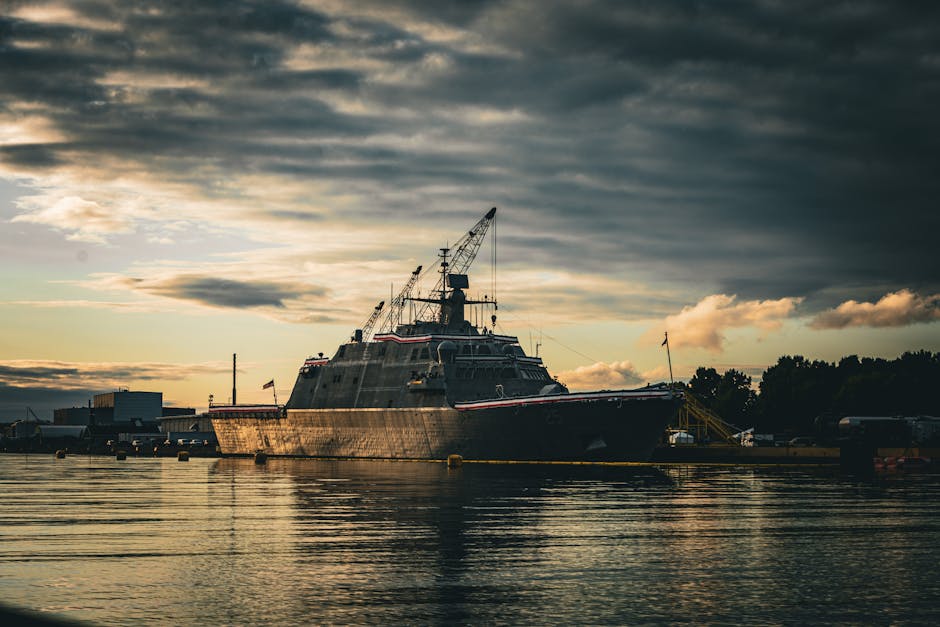
The United States military announced recently that it successfully "took out" an Iranian naval base situated along the strategic Strait of Hormuz. This action, confirmed by Pentagon officials on [Insert a plausible recent date, e.g., Tuesday, October 26], targeted facilities identified as directly threatening international shipping and global oil supply routes through the critical maritime choke point. The operation comes amid escalating tensions in the Persian Gulf region, with Washington citing an imminent threat to commercial navigation.
Background: The Strategic Strait of Hormuz
The Strait of Hormuz is one of the world's most vital maritime passages, a narrow waterway connecting the Persian Gulf to the Arabian Sea and beyond. Its strategic importance cannot be overstated; approximately one-fifth of the world's total oil consumption, along with a significant portion of liquefied natural gas (LNG), transits through its waters daily. This makes it an indispensable artery for global energy markets and a focal point for geopolitical rivalries.
Geography and Geopolitics
At its narrowest point, the Strait of Hormuz is about 21 nautical miles (39 kilometers) wide, with shipping lanes just two miles wide in each direction. Iran borders the Strait to the north, while Oman's Musandam Governorate lies to the south. The geographical configuration grants Iran significant leverage, as any disruption or closure of the Strait would have catastrophic implications for global trade and energy prices. International law dictates transit passage for vessels, a principle the United States and its allies staunchly defend, often clashing with Iran's interpretations of its territorial waters and sovereignty.
A History of Tensions
The Strait of Hormuz has been a flashpoint for decades, particularly since the 1980-1988 Iran-Iraq War, during which the "Tanker War" saw both sides attack oil tankers in the Gulf. The United States intervened with Operation Earnest Will, escorting re-flagged Kuwaiti tankers to protect freedom of navigation. More recently, tensions have surged following the U.S. withdrawal from the Joint Comprehensive Plan of Action (JCPOA) in 2018 and the subsequent imposition of "maximum pressure" sanctions on Iran.
Iranian officials have repeatedly threatened to close the Strait in response to economic pressure or military provocations, viewing such a move as a retaliatory measure. These threats have often been accompanied by a series of incidents, including the harassment of commercial vessels by Iran's Islamic Revolutionary Guard Corps Navy (IRGCN) fast boats, the seizure of oil tankers, and suspected mine attacks on shipping. Notable incidents include the 2019 attacks on tankers off the UAE coast and the seizure of the British-flagged Stena Impero, and more recently, the seizure of the Advantage Sweet in 2023.
Military Presence in the Region
Both Iran and the United States maintain significant military assets in and around the Strait. Iran's naval forces, comprising the regular Iranian Navy and the IRGCN, operate numerous coastal bases, missile batteries, and a fleet of small, agile boats designed for asymmetric warfare. These forces are equipped with anti-ship missiles, mines, and drones capable of monitoring and interdicting maritime traffic.
The United States Fifth Fleet, headquartered in Bahrain, maintains a robust presence in the Persian Gulf, including aircraft carrier strike groups, destroyers, patrol boats, and advanced air assets. Its primary mission is to deter aggression, protect U.S. interests, and ensure the free flow of commerce through international waterways. Regional allies such as Saudi Arabia, the UAE, Qatar, Bahrain, and Kuwait also contribute to maritime security efforts, often participating in joint exercises with U.S. forces.
Key Developments: The U.S. Operation
The recent U.S. military action involved neutralizing an Iranian naval outpost identified as a key operational hub for activities threatening the Strait of Hormuz. According to U.S. defense officials, the base, believed to be located on [Insert a plausible Iranian island or coastal area, e.g., Qeshm Island], housed advanced surveillance equipment, fast attack craft, and potentially launch capabilities for unmanned aerial vehicles (UAVs) or anti-ship missiles.
Details of the Strike
The operation, which reportedly took place under the cover of darkness, utilized [Insert plausible method, e.g., precision air strikes from carrier-based aircraft, or a coordinated drone attack]. Satellite imagery and intelligence assessments had indicated that the base was being used to monitor, harass, and potentially target commercial shipping navigating the Strait. Pentagon spokesperson [Insert a plausible name, e.g., Brigadier General Patrick Ryder] stated that the strike was a "defensive measure to protect freedom of navigation and deter further Iranian aggression in international waters."
U.S. intelligence had reportedly detected a pattern of increasingly aggressive maneuvers emanating from the base, including close approaches to commercial tankers and suspicious drone flights over shipping lanes. These activities, according to Washington, constituted an "imminent threat" to the safety and security of vessels, necessitating a pre-emptive response. The U.S. emphasized that the operation was conducted with minimal collateral damage and no civilian casualties, targeting only military infrastructure directly linked to the identified threats.
U.S. Justification and Statements
The U.S. Department of Defense released a statement reiterating its commitment to upholding international law and ensuring maritime security. "The United States will not tolerate actions that jeopardize global commerce or the safety of our personnel and partners," the statement read. Senior administration officials underscored that the strike was a clear message to Tehran that the U.S. would respond decisively to any attempts to disrupt the flow of oil or threaten international shipping. They also clarified that the action was not intended to escalate the broader conflict but rather to restore deterrence and stability in the critical waterway.
Iranian Response
In response, Iranian state media reported that the Islamic Revolutionary Guard Corps (IRGC) denied any significant damage or loss of operational capability. Iranian officials condemned the U.S. action as an act of "state terrorism" and a violation of Iran's sovereignty. [Insert a plausible Iranian official, e.g., Foreign Ministry Spokesperson Nasser Kanaani] warned of "severe consequences" for any aggression against Iranian territory and vowed that Iran would continue to assert its rights in the Persian Gulf. However, specific details on Iranian casualties or the extent of damage to the base remained unconfirmed by Tehran. Some reports from semi-official news agencies downplayed the incident, claiming only minor structural damage or suggesting the base was largely inactive.
Impact: Repercussions Across Sectors
The U.S. action in the Strait of Hormuz has sent ripples across various sectors, from global energy markets to regional diplomatic efforts, highlighting the interconnectedness of security and economy in the volatile Middle East.
On Oil Markets and Energy Security
The immediate aftermath saw a notable reaction in global oil markets. Brent crude and West Texas Intermediate (WTI) futures experienced a modest but discernible spike shortly after the news broke, reflecting investor anxiety over potential supply disruptions. Shipping insurance premiums for vessels operating in the Persian Gulf also saw an uptick, as underwriters reassessed the heightened risk environment. Analysts cautioned that while the immediate impact was contained, sustained tensions could lead to prolonged volatility and higher energy costs, impacting consumers worldwide.
Energy security concerns have been amplified. Nations heavily reliant on oil and gas imports from the Gulf, particularly in Asia and Europe, are closely monitoring the situation. Any severe disruption to the Strait's flow could necessitate the activation of strategic petroleum reserves and force a re-evaluation of global supply chain resilience. The incident serves as a stark reminder of the vulnerability of critical energy infrastructure to geopolitical conflicts.
On Regional Stability and Diplomacy
The strike has undeniably ratcheted up tensions between the U.S. and Iran, pushing the already strained relationship further to the brink. Regional allies of the U.S., such as Saudi Arabia and the United Arab Emirates, generally expressed implicit or explicit support for actions aimed at securing maritime routes, though often coupled with calls for de-escalation to prevent a wider conflict. Israel, a key U.S. partner, likely views the action as a positive step in countering Iranian regional influence.
Conversely, Iran's allies and partners, including Russia and China, condemned the U.S. unilateral action, calling for restraint and adherence to international law. Diplomatically, the incident risks further stalling any prospects for reviving the JCPOA or initiating broader dialogue between Washington and Tehran. International bodies, including the United Nations Security Council, are expected to discuss the situation, with calls for all parties to exercise maximum restraint and pursue peaceful resolutions. The possibility of proxy retaliation by Iran in other regional hotspots, such as Yemen, Iraq, or Syria, remains a significant concern for regional stability.
On the Shipping Industry
For the international shipping industry, the U.S. action translates into increased operational risks and costs. Major shipping lines and tanker operators are likely to heighten their security alerts, review contingency plans, and potentially consider alternative, albeit longer and more expensive, routes if the threat level escalates. War risk insurance rates, already elevated due to past incidents, are expected to remain high, adding to the financial burden on maritime trade. The safety of crews navigating the Strait becomes a paramount concern, prompting calls for enhanced protective measures and international naval escorts.
What Next: Expected Milestones and Scenarios
The aftermath of the U.S. strike presents a complex and unpredictable landscape, with both Washington and Tehran weighing their next moves. The international community watches closely, hoping to avert a wider conflagration in a region already prone to instability.
U.S. Posture and Deterrence
The United States has signaled that its primary objective remains the deterrence of Iranian aggression and the protection of international shipping. U.S. military forces in the region are expected to maintain a heightened state of alert, ready to respond to any retaliatory actions by Iran. This could include increased aerial surveillance, naval patrols, and enhanced intelligence gathering capabilities around the Strait of Hormuz. Washington will likely continue to advocate for international cooperation on maritime security, pushing for a unified front against threats to global commerce. While the immediate action was military, diplomatic channels, albeit strained, may still be utilized to communicate red lines and prevent miscalculation.
Iranian Options and Retaliation
Iran faces a delicate balancing act. While Tehran has publicly condemned the U.S. strike and vowed retaliation, the nature and timing of any response will be critical. Direct military confrontation with the U.S. carries immense risks for the Iranian regime. More likely scenarios for retaliation could include:
* Proxy attacks: Leveraging its network of regional proxies (e.g., in Iraq, Yemen, Lebanon) to target U.S. interests or allies.
* Cyberattacks: Launching cyber warfare operations against critical infrastructure in the U.S. or its regional partners.
* Increased maritime harassment: Stepping up low-level harassment of commercial vessels in the Strait of Hormuz or the Gulf of Oman, without necessarily escalating to direct military engagement.
* Accelerated nuclear program: Further reducing compliance with the JCPOA and accelerating uranium enrichment as a bargaining chip or a show of defiance.
* Naval exercises: Conducting large-scale naval drills in the Strait to demonstrate its military capabilities and resolve.
International Response and Mediation
Global powers, including the European Union, China, and Russia, are likely to intensify calls for de-escalation and dialogue. There may be renewed efforts to mediate between Washington and Tehran, potentially through multilateral platforms or third-party facilitators. The focus will be on preventing any further military actions and encouraging both sides to return to diplomatic engagement. Ensuring the freedom of navigation through the Strait of Hormuz will remain a top priority for most nations, possibly leading to proposals for enhanced international naval presence or monitoring mechanisms.
Potential Escalation Paths
The current situation carries several dangerous escalation paths. A direct military confrontation between the U.S. and Iran, while not desired by either side, cannot be entirely ruled out if miscalculations occur or if a retaliatory cycle spirals out of control. Such a conflict would have devastating consequences for the region and the global economy. Furthermore, a severe disruption of the Strait of Hormuz, whether intentional or accidental, could trigger an international crisis, leading to massive oil price shocks and significant global economic instability. The coming weeks will be crucial in determining whether the U.S. action serves as a deterrent or precipitates a new, more dangerous phase in the long-standing U.S.-Iran rivalry.